

Product philanthropy turns an operational liability into positive social impact
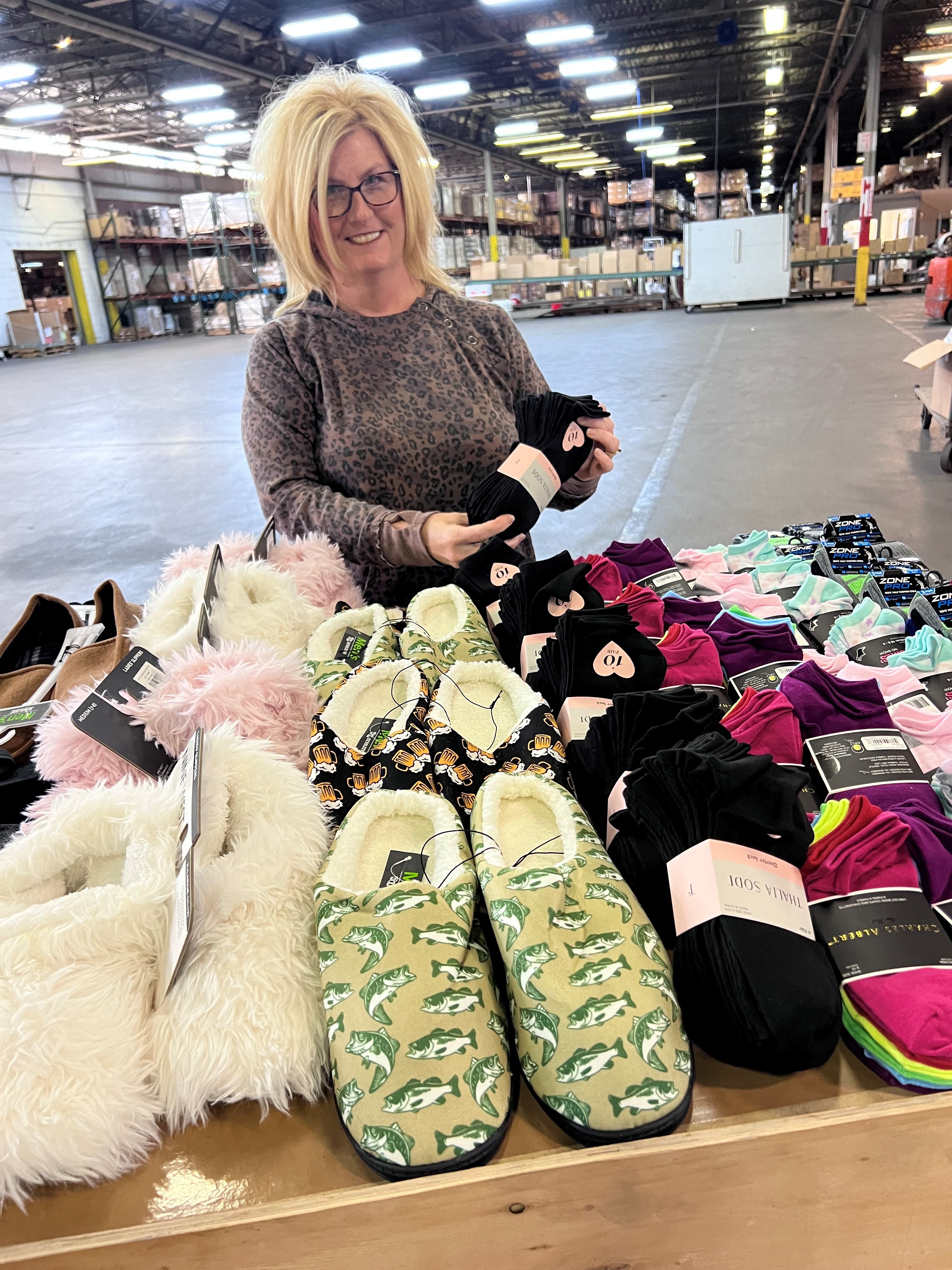
Paula DeJaynes opening a donation.
Companies can show support for education by donating excess inventory using NAEIR.org
In-kind donations not only benefit nonprofits and teachers; they also can help a company's bottom line.”
GALESBURG, IL, UNITED STATES, March 9, 2026 /EINPresswire.com/ -- — Paula DeJaynes
Many schools in the United States are underfunded, with a significant number facing funding gaps that negatively impact student resources and outcomes. On average, American teachers spend between $500 and $900 out of their own families’ budgets to supplement the materials and supplies their students need, according to the National Education Association.
Meanwhile, manufacturers, wholesalers, and retailers of school and office supplies may be experiencing fairly tight inventories currently, with a relatively robust inventory-to-sales ratio. But the outlook for 2026 is decidedly mixed, with announced job layoffs already outpacing 2025 and the uncertain tariff landscape.
What will happen with inventories is anyone’s guess. It makes good business sense to be prepared if a company suddenly find itself with too much product and not enough sales, whether that’s because of economic shifts, product discontinuation, or seasonal transitions.
This could be a marriage made in heaven. From notebooks to backpacks to winter coats, if a product is safe, usable, and compliant, there is likely a teacher or school that an distribute it responsibly. And the best way to get them in the right hands is through product philanthropy.
What is product philanthropy?
Product philanthropy is a form of in-kind giving that benefits communities as well as businesses. It helps nonprofit organizations, schools, and churches serve more people in their communities, while potentially generating a tax deduction for regular C corporations.
There are several product philanthropy organizations in the U.S. These are nonprofits that collect corporate product donations and then turn them over to carefully vetted and qualified 501(3)(c)nonprofits. They do the legwork of making sure that donations are used appropriately and shipping them, taking a huge burden off individual companies.
Benefits of product philanthropy
A single pallet of donated notebooks or art supplies can:
• Equip under-resourced classrooms
• Support after-school programs
• Help teachers avoid paying out-of-pocket
• Prepare students for academic success
Working with a reputable in-kind donation operation, a company will receive a full accounting of how the donation was used. It also ensures that merchandise doesn’t end up with a liquidator or on the open market where its brand can be diluted.
Another important consideration: Companies that have to meet goals for waste and salvage in order to improve ESG metrics find that product philanthropy keeps their items out of landfills.
In these challenging times, an in-kind donation may benefit the bottom line as well. Section 170(e)(3) of the Internal Revenue Code states that when regular C corporations donate inventory to qualified nonprofits, they can receive a tax deduction equal to up to twice the cost of the donated products.
For example, if a product costs $10 and retails for $30, the difference is $20. Half of $20 is $10. So, $10 (product cost) plus $10 (half the difference) equals a $20 deduction. As $20 does not exceed twice the product cost, it is an allowable deduction.
Best of all, a company has the satisfaction of knowing it has helped teachers and students have a more successful school year. In addition, the positive PR generated by such generosity can burnish a company’s reputation.
In the school and office supply industry, surplus is inevitable. Back-to-school is compressed. Product cycles are fast. Retail expectations shift quickly. Packaging refreshes happen frequently. If you’re not sure what the future holds for your inventory, get acquainted with a product philanthropy organization and find out how it could be part of a solution.
Paula DeJaynes is president of NAEIR (rhymes with “share”), the National Association for the Exchange of Industrial Resources, the largest product philanthropy organization in the U.S. Galesburg, Ill.-based NAEIR (www.naeir.org) has received from more than 8,000 U.S. corporations and redistributed more than $3 billion in products to nonprofits and schools. According to Ms DeJaynes, " In-kind donations not only benefit nonprofits and teachers; they also can help a company's bottom line." For further information, Paula can be reached at 800-562-0955 or prd@naeir.org.
Joanne Levine
Lekas & Levine PR
joannepr@aol.com
Legal Disclaimer:
EIN Presswire provides this news content "as is" without warranty of any kind. We do not accept any responsibility or liability for the accuracy, content, images, videos, licenses, completeness, legality, or reliability of the information contained in this article. If you have any complaints or copyright issues related to this article, kindly contact the author above.
